
Disclosure: As an Amazon Associate I earn from qualifying purchases. How this site works
Kitchen Runner Sizes
Measure the clear floor, then subtract a little.
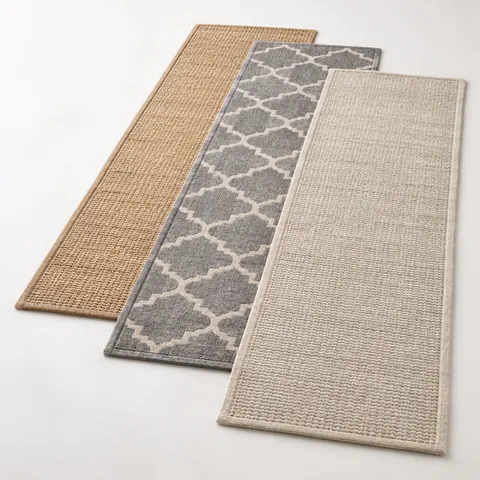 Kitchen runners
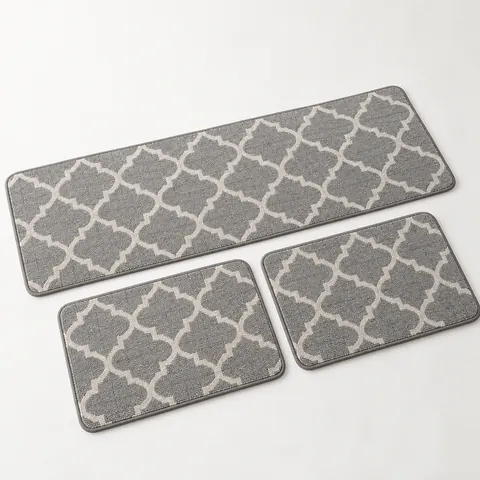 Washable kitchen rugs
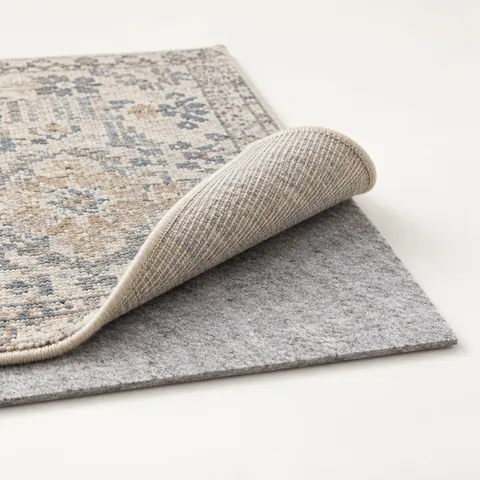 Rug pads
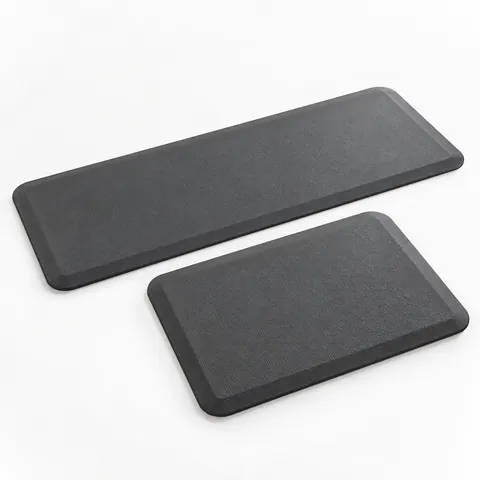 Anti-fatigue mats
Standard runner sizes
| Width | Lengths |
|---|---|
| 2 ft | 5, 6, 8 ft |
| 2.5 ft | 6, 8, 10, 12 ft |
| 3 ft | 8, 10, 12 ft |
Measuring
- Measure the distance between cabinets or cabinet and island.
- Subtract 8–12 in for the width.
- Measure the run length and subtract 12–24 in so the runner stops short of ends and doorways.
- Check that dishwasher and oven doors open without catching.
Browse kitchen runners.
What size runner fits a galley kitchen?
For a galley kitchen, the best runner size is usually the longest rug that leaves a visible border of floor on all four sides and does not block appliance doors. Start with the narrowest point in the aisle, because cabinet pulls, refrigerator handles, and an overhanging counter can make the usable walking space smaller than the wall-to-wall measurement.
Most galley kitchens look balanced when the runner covers the main walking path without reaching under base cabinets. If your aisle is tight, a 2 ft wide runner is often easier to live with than a 2.5 ft or 3 ft width. In a wider galley, choose the width that leaves at least several inches of bare floor on both sides so the rug looks intentional rather than wall-to-wall.
For length, decide whether the runner should serve the sink zone only or the full work aisle. A shorter runner can sit in front of the sink, dishwasher, and prep counter. A longer runner can visually connect the refrigerator, sink, and range, but it should still stop before thresholds, floor vents, and sharp turns.
| Galley aisle measurement | Runner width to consider | Why it works |
|---|---|---|
| 32–36 in clear aisle | 2 ft runner | Leaves a modest border and reduces edge catching in a narrow path. |
| 37–44 in clear aisle | 2 ft or 2.5 ft runner | Choose 2 ft for more exposed floor, 2.5 ft for more coverage. |
| 45–54 in clear aisle | 2.5 ft or 3 ft runner | Works when appliance doors still clear the rug edges. |
| Over 54 in clear aisle | 3 ft runner or two separate rugs | A single narrow runner may look undersized in a very wide aisle. |
What size runner goes beside a kitchen island?
In an island kitchen, measure the aisle where people actually walk, not the total distance across the room. The runner should sit centered in the walkway between the island and the opposite counter, or slightly closer to the sink side if that is where you stand most often.
A good island runner usually follows the length of the island without exactly matching it. Leaving the rug shorter than the island by several inches at each end keeps it from looking jammed into the room. If the island has seating, do not run a rug where stools slide in and out unless there is enough room for the stool legs to stay fully on or fully off the rug.
For a long island, one long runner is cleaner than two short rugs if the walkway is straight and uninterrupted. Two rugs may work better when a doorway, floor vent, pet bowl, trash pullout, or appliance door breaks up the run.
Use this quick check before ordering: place painter’s tape on the floor to mark the proposed rug size. Walk around the island, open every door, pull out the dishwasher rack, and move any stools. If you have to step over a taped edge during normal cooking, shorten or narrow the size before you buy.
If you already know the length you need, browsing kitchen runners by length can be faster than starting with color or pattern.
How much floor should show around a kitchen runner?
The exposed floor border is what makes a runner look sized to the kitchen instead of squeezed into it. A common rule of thumb is to leave more floor at the ends than at the sides. Side borders can be narrower because the runner follows a walkway; end borders need more breathing room near thresholds, cabinet runs, and turns.
Try to keep the side borders even when the cabinets are parallel. In older kitchens, walls and cabinets may not be perfectly square, so use the tightest measurement and center the rug by eye. If the runner looks crooked because the room is crooked, aligning it with the cabinet run is usually better than aligning it with a far wall.
At the ends, stop short of doorways and transitions to other flooring. A runner that crosses a threshold can curl, shift, or interfere with a door sweep. If the kitchen opens to another room, ending the runner before the opening also makes cleaning easier because crumbs and grit are less likely to collect at the transition.
- Leave enough bare floor at the sink base so cabinet toe kicks remain visible.
- Avoid placing a rug edge directly where you pivot from sink to range.
- Do not cover floor registers unless the rug material and register location make that safe and practical.
- Keep rug corners out of the refrigerator swing path and pantry door swing path.
- If the floor has a strong plank or tile pattern, center the runner on the walkway rather than on a single grout line.
Which kitchen runner material and thickness work best?
Size matters, but material and thickness decide how easy the runner is to live with. In kitchens, the rug has to handle crumbs, splashes, greasy residue, and frequent vacuuming. Low-pile and flatweave rugs are usually more practical than thick, plush rugs because chair legs, cabinet doors, and appliance doors are less likely to catch on them.
Washable rugs are useful in front of sinks and prep zones, but check the care instructions before buying. Some washable rugs need a large washer or low-heat drying, and some should be air dried. If the rug will be washed often, confirm that the full size you choose can fit your laundry setup, not just that the product line is labeled washable. See washable kitchen rugs if easy cleaning is the main priority.
Flatweave rugs tend to be thinner and easier to place under low-clearance doors. They may offer less cushion, but they are often easier to vacuum and shake out. Indoor-outdoor rugs can be a good fit for messy households because many are made to resist moisture and clean up with spot treatment, but they can feel firmer underfoot than cotton or wool-style weaves.
If comfort is the main reason you want a runner, check the rug thickness and consider whether a separate mat would be better at the sink. Anti-fatigue mats are designed for standing, while runners are mainly for coverage, traction, and style. A runner can soften the floor, but a thick cushion may create a trip edge in a busy aisle.
Whatever material you choose, use a low-profile rug pad if the rug slides. In a kitchen, a pad should be thin enough that it does not raise the rug into appliance doors. A thin rug pad can also help protect floors and keep corners from shifting, but it should be trimmed so it does not show beyond the runner.
Common runner sizing mistakes to avoid
- Buying the exact aisle width. A runner needs floor showing on both sides; otherwise it can look like carpet fitted into a hallway.
- Forgetting appliance clearances. Open the oven, dishwasher, refrigerator, freezer drawers, and any pullout trash cabinet before settling on the size.
- Letting the rug end at the busiest pivot point. If the edge lands where you turn from sink to stove, it is more likely to curl or become annoying.
- Choosing a thick rug for a low-clearance kitchen. Thick rugs can stop doors from opening smoothly and can make a narrow kitchen feel crowded.
- Ignoring pattern placement. A bold border can make a rug look off-center if the visible floor border is uneven.
- Using two runners that almost touch. If two rugs are needed, leave a clear break between them so the gap looks deliberate and is easy to clean.
Before checkout, compare the listed rug dimensions with your taped layout. Rug sizes are often rounded, and handmade or woven items can vary slightly. If the exact size is critical because of a dishwasher door, floor vent, or doorway, read the merchant’s dimension notes carefully and choose a size with a little extra clearance.
Frequently asked questions
Should a kitchen runner go under the sink only or the whole aisle?
Either can work. Choose a shorter runner if you mainly want comfort and splash protection at the sink and dishwasher. Choose a longer runner if you want to define a galley or island walkway, as long as the ends stop short of doors and transitions.
Is a 2x6 or 2x8 runner better for a small kitchen?
Use 2x6 when the sink or prep zone is the focus and the kitchen has short runs or nearby doorways. Use 2x8 when the clear walkway is longer and you can still leave open floor at both ends. Painter’s tape is the easiest way to see which length feels less cramped.
Can I put a runner in front of the dishwasher?
Yes, but check the door and lower rack before buying. The dishwasher door should open fully without pushing the rug, and the bottom rack should roll out normally. A low-pile or flatweave runner is usually safer here than a thick rug.
Do kitchen runners need a rug pad?
A rug pad is a good idea if the runner slides, bunches, or curls at the corners. Pick a thin pad that is compatible with your flooring and trim it slightly smaller than the rug. Avoid thick pads in spots where appliance doors need low clearance.
Can I use two runners in one kitchen?
Yes, especially in large kitchens with separate sink and range zones or an island plus a side walkway. Keep the rugs similar in thickness and leave a clear gap between them. Matching sizes are not required, but the colors and patterns should feel related.
Disclosure: As an Amazon Associate I earn from qualifying purchases. This site may earn a commission when you buy through its links, at no extra cost to you. Product details come from public manufacturer information; always check the merchant page for current specifications and prices. We have not hands-on tested the products described here.